The Base44 vs Lovable decision comes down to your product goals, your team’s technical experience, and how you plan to run the app after launch.
Both are AI app (or “vibe coding”) builders that turn plain-language prompts into working applications. You can describe the screens, features, and user flows you need, then make changes through follow-up prompts, even with little coding experience. Both can build and publish full-stack applications with a database, user login, and a shareable URL.
The key differences in Lovable vs Base44 come down to how each platform handles your backend, development workflow, and deployment. Base44 manages your database and authentication, and you can export your application’s code. Moving fully off Base44 means replacing those managed backend services.
Lovable also offers a managed backend through Lovable Cloud, along with Git synchronization and documented paths to external hosting. Moving your backend still requires migrating data and configuring services such as authentication. They might not mean much now, but I’ll explain how these choices shape what you can customize, where your app can run, and how your team maintains it as requirements grow.
For the hands-on part of this comparison, I gave both platforms the same expense-management prompt and measured what happened from the first generation onward. I then used current platform documentation to evaluate production capabilities I could not reproduce in the same session, including paid Git workflows, Enterprise governance, backend migration, and self-hosting.
If your Base44, Lovable, or other AI prototype is already working but architecture, security, data integration, or production hardening is now the bottleneck, ClickIT’s AI Product Development team can help take it from prototype to production. Talk to a Lead Architect about a tailored delivery plan.
Blog Overview
Base44 vs Lovable guide breakdown:
- Product Capabilities: What both platforms can actually build in 2026, from managed backends and authentication to Git workflows and external deployment.
- The Architectural Difference: How Base44’s integrated platform and Lovable’s more portable stack affect your database, server-side logic, integrations, and production setup.
- Code Ownership and Portability: What you can inspect, export, move, self-host, or replace when your app outgrows the builder.
- The Production Decision: How both platforms compare on speed, developer handoff, governance, testing isolation, and total cost of ownership.
- How to Test Them Yourself: A repeatable framework for measuring the same application on both platforms without confusing documented features with what you actually tested.
By the end, you’ll have a clearer picture of which platform fits your product team and what each choice means after the prototype is already working.
How I Tested Base44 vs Lovable
Hands-on test setup
I built the same expense-management workflow in Base44 and Lovable in September 2026 using the same starting prompt and acceptance criteria.
I used the no-cost accounts available on both platforms for the initial generation test. That was enough to compare first-pass generation, UI decisions, progress toward the requested workflow, and available build-credit usage.
Core workflow: employee sign-in, expense submission with a required receipt, manager review, approve/reject status, and dashboard totals.
Base44 follow-up: after publishing, I created separate employee and manager accounts and completed the core role workflow with two authenticated users.
What I measured: time to the first visible preview, time to the more complete workflow, interruptions or design decisions during generation, available build-credit usage, and whether the generated Base44 workflow held up across separate authenticated roles.
What remained outside this hands-on session: paid Git workflows, Base44 Test Data, Enterprise governance, backend migration, self-hosting, and production-scale load testing. Those sections rely on current platform documentation.
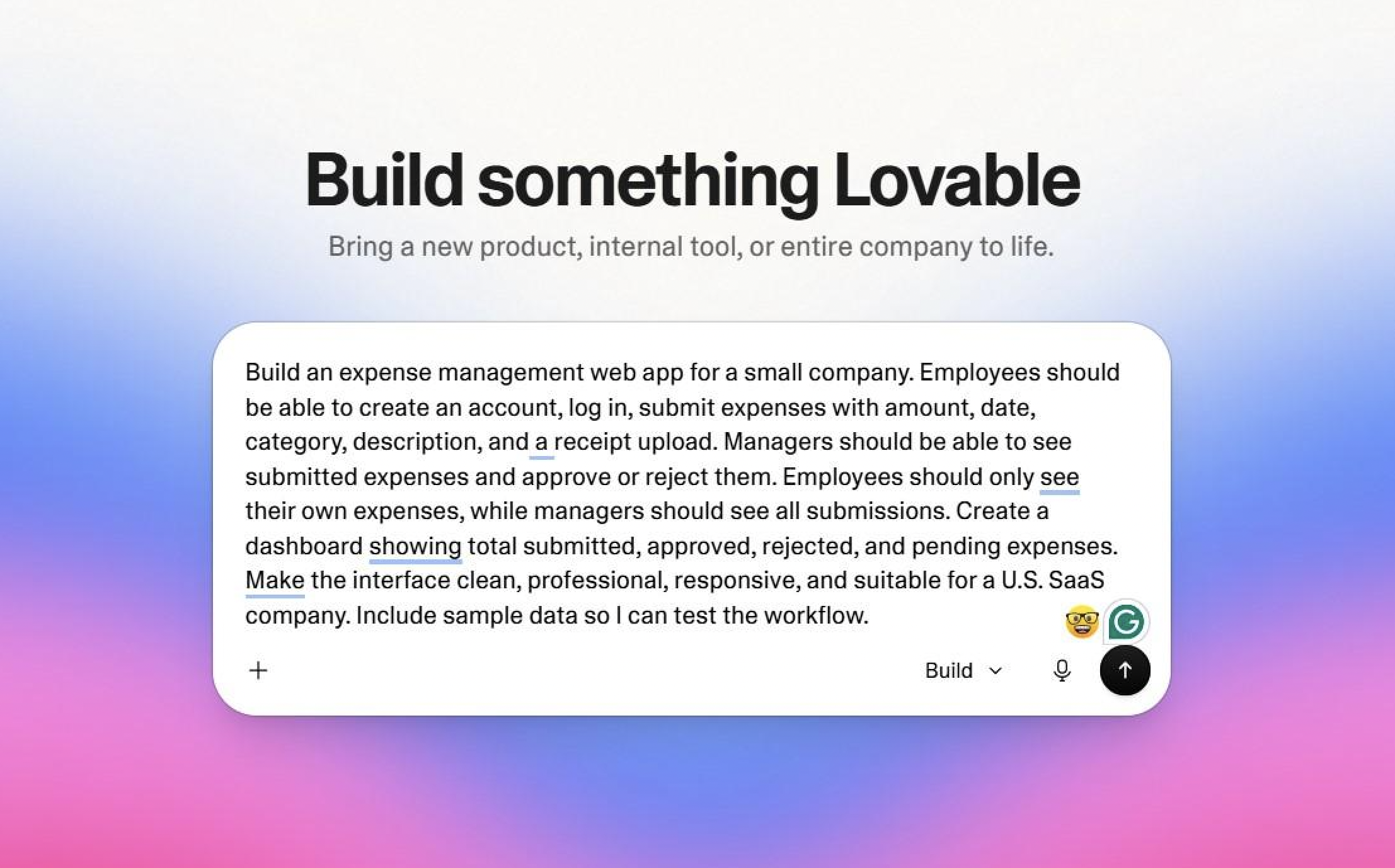
Lovable: The starting prompt I used in Build mode.
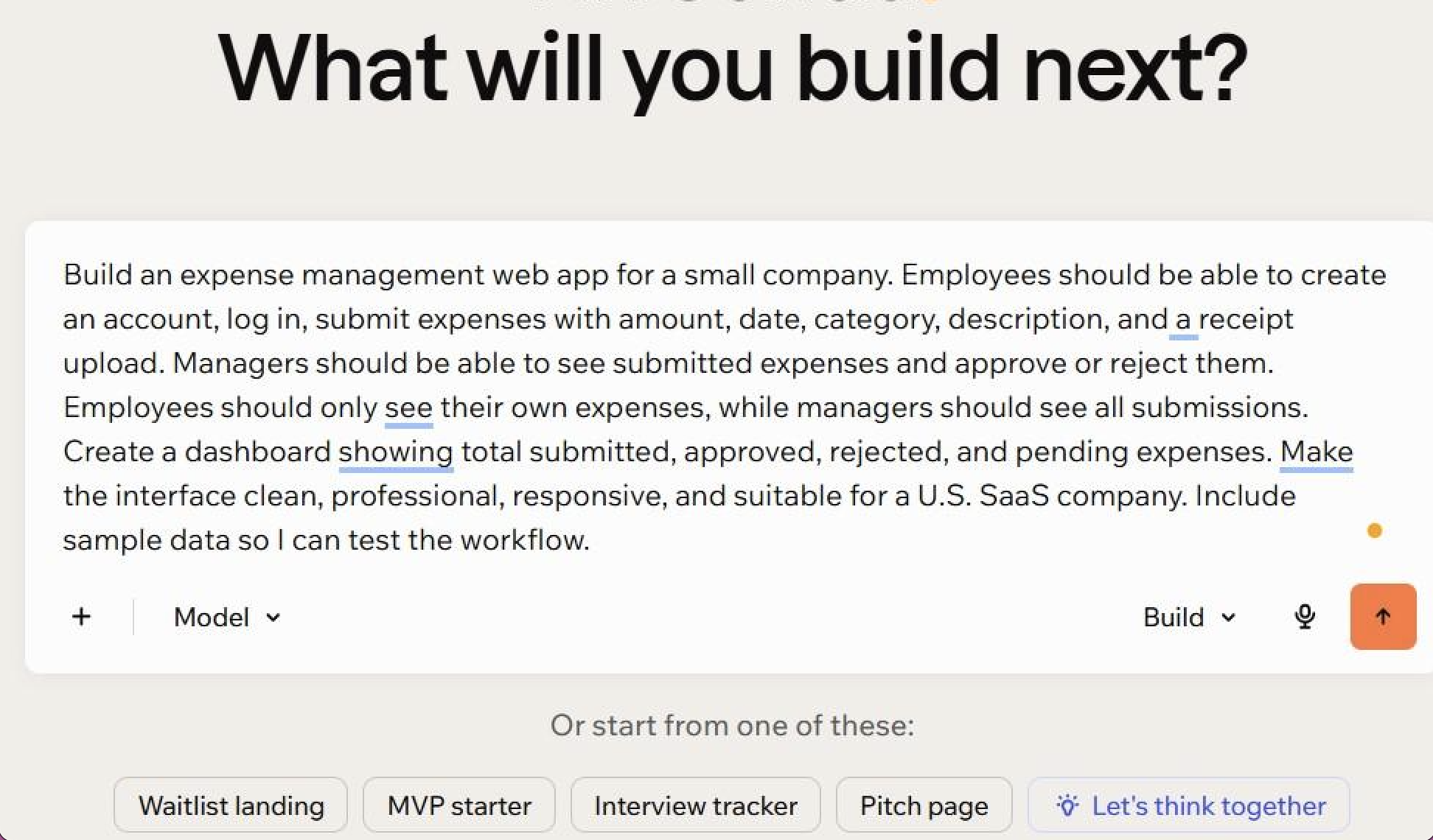
Base44: Identical starting prompt in Build mode.
What Can Base44 vs Lovable Do? Product Capabilities
1. Core Operating Model
Base44 brings your database, user authentication, file storage, backend functions, and hosting into one managed platform.
For example, if you were building an expense tracker, you could ask for employee records, sign-in, receipt uploads, and approval workflows without setting up a separate database service. Base44 already provides the infrastructure that keeps those features running.
Lovable offers an integrated setup through Lovable Cloud, which manages database services, authentication, storage, and backend functions. You can also connect a Supabase project in your own account, giving your team direct access to its dashboard, configuration, and billing. In practical terms, you can decide whether your backend lives inside Lovable’s managed environment or in a Supabase account your team controls.
2. Initial Setup
I started both builds by describing what I wanted the application to do. In Base44, that prompt is the starting point for generating the interface and supporting features, with database services and hosting already available in the platform. You can ask for forms, dashboards, login, and data storage in the same brief. It also includes a preview that lets you click through the result before publishing, so you can check whether the app meets your requirements.
Lovable also starts from a prompt. Its Plan mode lets you work through requirements and architecture before generating changes, while Build mode handles implementation. Lovable Cloud can provide the backend as needed; connecting your own Supabase project adds an account and integration step.
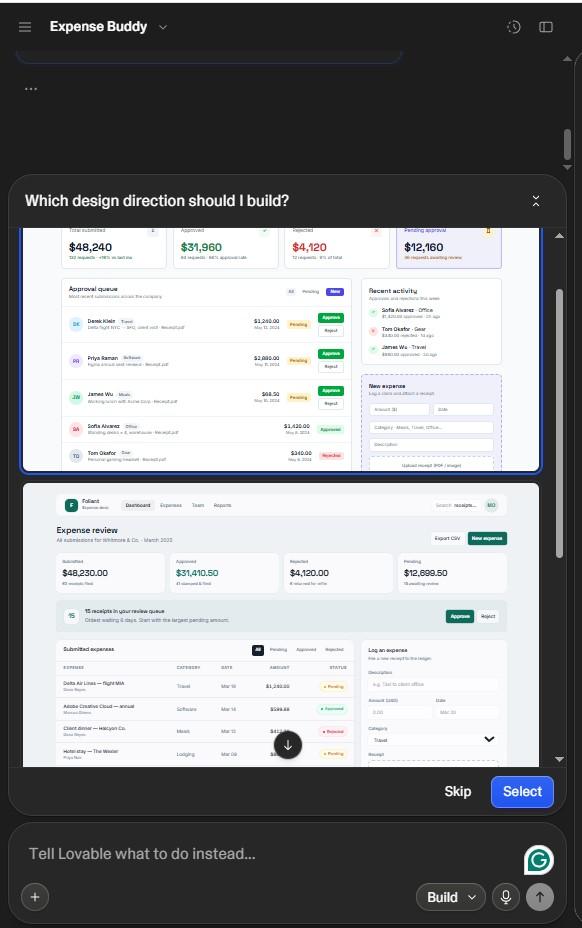
In the hands-on test, Lovable gave more control over the visual direction early. About one minute into generation, it paused and presented three interface directions to choose from. Base44 kept building without asking me to make that design decision. For pure speed to a working workflow, I preferred Base44’s approach in this test. Lovable’s approach gave more influence over the UI before the first build was complete.
Any follow-up prompts you use to correct or extend the generated app also count toward your credit usage.
3. Developer Workflow
Base44 lets you make changes through chat, visual editing, and its code editor. Its generated apps use React and Vite, and two-way GitHub sync is available on Builder plans and above. Your developers can work in a local editor and bring changes back through the connected repository. Base44 also provides a CLI for local development and backend work.
Lovable supports prompt-based development, code inspection, and two-way synchronization with GitHub, GitLab, and Bitbucket on all plans. Your team can review changes, work locally, and bring updates back into Lovable. Direct editing inside Lovable’s code editor requires a paid plan.
A 2026 update confirms that new Lovable projects now use TanStack Start, a React-based framework that supports server-side rendering. Older React/Vite projects continue to work. I’ll get into the deployment implications later, but the important point is that your project’s stack now affects what infrastructure it needs outside Lovable.
4. Portability at a Glance
This is where I separate Base44 vs Lovable into four different questions instead of treating ownership as one feature:
- Source code: Both platforms give developers access to generated code. Base44’s GitHub and ZIP workflows start on Builder and above, while Lovable supports Git synchronization on all plans and ZIP downloads on paid plans.
- Data: Base44 exports individual tables as CSV. Lovable supports table exports and full database exports, while storage files move separately.
- Backend: Base44’s managed authentication and database services remain Base44 infrastructure unless your team replaces them. Lovable documents migration paths to managed or self-hosted Supabase.
- Deployment: Both can move application code outside the original builder.
5. What This Means for Your Team
My recommendation is Base44 for teams that want to build around an integrated managed platform, particularly for internal tools, customer portals, and early products. Its code access and developer tools also leave room for engineers to participate as requirements grow.
Lovable is the stronger fit when your roadmap includes a company-controlled backend, regular development outside the builder, or a planned move to external infrastructure.
Base44 vs Lovable: Capabilites at a Glance
| Capability | Base44 | Lovable |
|---|---|---|
| Core operating model | Integrated database, authentication, backend functions, and hosting. | Lovable Cloud or a connected Supabase project in your own account. |
| Initial setup | Prompt-driven generation with built-in infrastructure. | Prompt-driven generation with managed Cloud or a separately connected backend. |
| Developer workflow | Chat, visual editing, code access, CLI, and GitHub synchronization on Builder and above. | Chat, code inspection, and GitHub, GitLab, or Bitbucket sync on all plans; in-app code editing on paid plans. |
| Source-code access | Frontend and custom backend-function exports on Builder and above. | Git repository sync on all plans; full ZIP downloads on paid plans. |
| Data portability | Individual table exports as CSV files. | Table and full database exports; storage files move separately. |
| Backend portability | Full departure requires replacing managed authentication and database services. | Documented Supabase migration paths with manual transfer and configuration work. |
| Independent deployment | External frontend hosting; backend dependencies handled separately. | External application hosting and backend migration, with project-specific runtime requirements. |
The Real Architectural Difference Between Base44 and Lovable
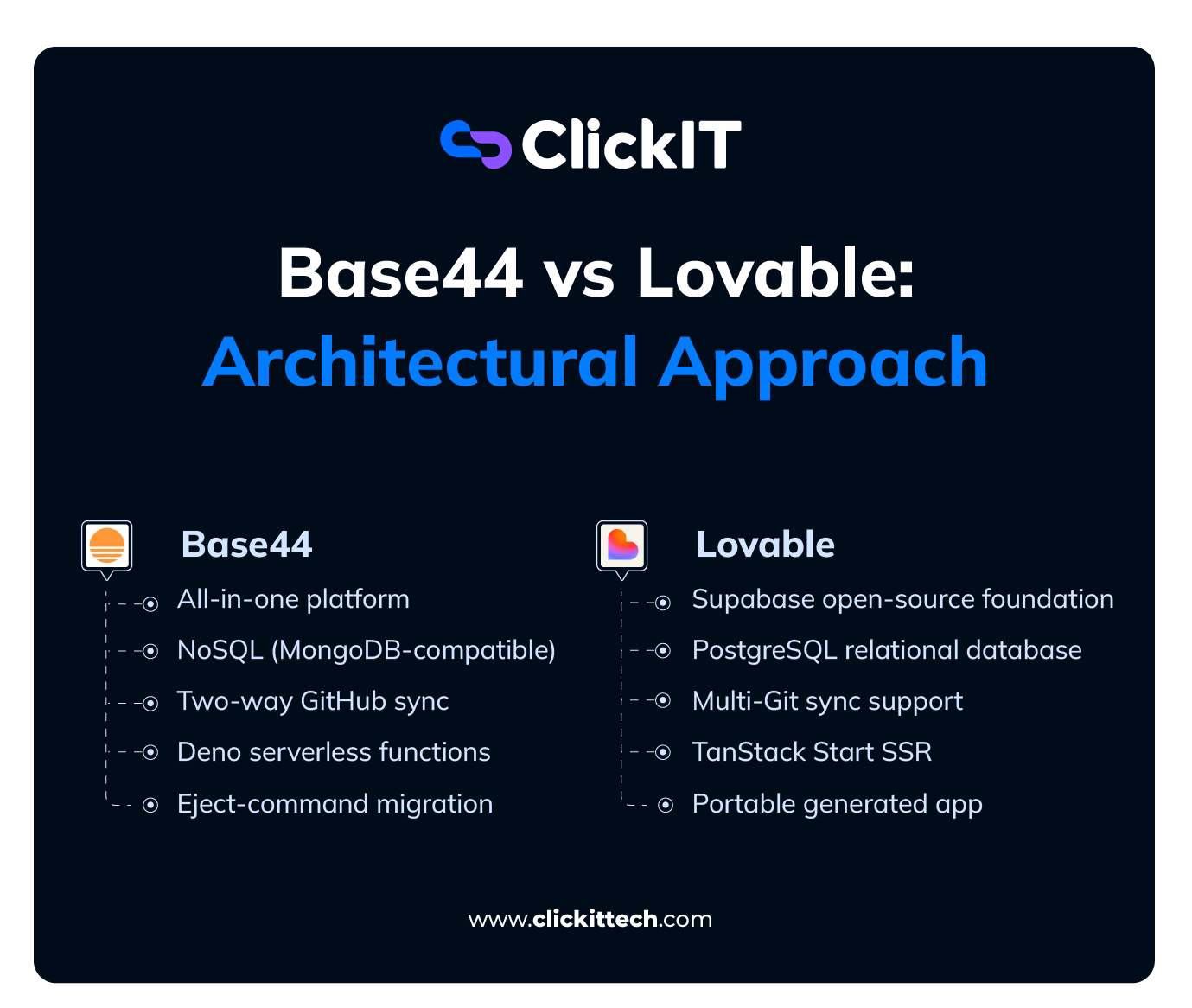
For me, the architectural question in Base44 vs Lovable comes down to what your team controls once customers depend on the application. Source code is one part of that decision. Authentication, database operations, integrations, and deployment each introduce responsibilities that become more important as your app grows.
Base44’s Managed-Platform Approach
Base44 brings your backend, authentication, data management, integrations, server-side functions, and hosting into one platform. So, your application gets those supporting services without your team selecting and connecting each provider separately.
Authentication and Permissions
New Base44 apps include customizable login, registration, and password-reset pages. You can configure sign-in methods and adjust data permissions through the dashboard or prompts.
In an expense-tracking app (which I used for my test), you can define who submits expenses, who approves them, and which records each person can access. Those permissions still need testing with the relevant user roles before launch.
Database Management in Base44
Base44 organizes your app’s data into entities, or groups of related records, stored in a MongoDB-compatible NoSQL database. In an expense tracker, you might have entities for expenses and categories, alongside built-in user accounts.
Think of each expense record as a digital form with fields for the amount, date, and category. A schema defines those fields and the rules they must follow, such as requiring the amount to be a number.
Once that structure is defined, Base44 provides the basic operations your app needs to add, view, update, and delete records. Developers access these through Base44’s SDK, which connects your app to its backend services. Your team can build features such as submitting an expense or correcting its amount without writing the underlying data-handling code from scratch.
Serverless Functions
Custom business logic runs in serverless functions. Base44 uses Deno-powered functions for work such as processing webhooks, calling external APIs, and running scheduled tasks.
Its integrations cover services such as Stripe and Resend, while custom API connections extend the application further. This means credentials can stay on the backend, where they are protected from visitors inspecting the browser’s code.
There is a practical limit here for your AI product team. Base44’s background-work utility is best-effort, with no guarantee that a task will complete or automatically retry if it fails. For work that must finish reliably, such as long document-processing jobs, I would use a separate worker or durable queue and let the app track progress and collect the result.
Version History and Data Recovery
Version history gives you a way to recover earlier application changes. You can preview previous versions, restore an earlier draft, or publish a previous version.
Database recovery has its own feature and plan requirements: Base44’s data version history provides seven days of history on Elite and 30 days on Enterprise. I recommend treating application rollback and recovery of deleted customer records as separate launch requirements.
GitHub Synchronization and eject
The 2026 developer workflow includes GitHub synchronization and `eject`. Two-way GitHub sync is available on Builder plans and above, allowing developers to work locally and bring changes back into Base44.
One detail to account for is that after connecting GitHub, Base44’s version-history restore is limited to versions present in the connected repository.
The Base44 eject command:
- Downloads your frontend code, entity schemas, functions, and configuration resources.
- Creates a separate backend on Base44 with a new application ID and an empty database.
- Leaves your original app unchanged.
Using the expense example, the new project receives the structure for storing expenses and the approval logic; existing submitted expenses require a separate transfer.
Hosting Your Frontend Separately
Base44 can also operate as a backend service for a separately developed frontend. Your team can host that frontend elsewhere and continue calling Base44 through its SDK. This gives you room to change the interface and development workflow while keeping the managed backend in place.
Lovable’s Portable-Stack Approach
Lovable also provides managed hosting and backend services through Lovable Cloud, built on Supabase’s open-source foundation. It can generate database tables, authentication flows, file storage, and backend functions from your requirements.
For the same expense tracker, you can describe how receipts should be uploaded, how expenses relate to employees, and who should approve them, then inspect the generated implementation inside the project.
Connecting Your Own Supabase Account
You can also connect a Supabase project in your own company account. Lovable builds against that project, including its database schema, migrations, and functions.
Your team controls the Supabase account, dashboard, subscription, and infrastructure settings. That keeps the backend under your administration as development moves between Lovable and your engineers’ usual tools.
I think of this setup as an application assembled from replaceable components:
- PostgreSQL handles the database.
- Authentication handles user identity.
- Storage holds uploaded files.
- Functions execute backend work.
Moving the application means accounting for each component and its configuration. Lovable’s deployment documentation supports moving the frontend and backend independently, including managed or self-hosted Supabase.
Git Synchronization and Backend Migration
Git synchronization covers the code and database migration files. Lovable supports two-way synchronization with GitHub, GitLab, and Bitbucket, with one repository and one actively synced branch per project.
Your database’s actual records stay outside that repository. Developers can review the instructions that create tables and permissions, while customer data follows a separate export and migration process.
That distinction matters when taking Lovable vs Base44 beyond a prototype. Moving a Lovable Cloud backend involves transferring records and files, restoring secrets, and configuring authentication.
Lovable’s migration guide also identifies password resets as a requirement for password-based accounts because user passwords cannot be exported. An ordinary PostgreSQL database needs equivalent authentication, storage, and function services to support an application using those Supabase capabilities.
External Integrations
External integrations give your team room to extend the application. Lovable supports Stripe payments and Resend email, and its custom API workflow can connect additional services through server-side functions and securely stored credentials.
Clerk also documents an implementation with Lovable and Supabase for teams choosing its authentication system. Each connection still needs the provider configuration and application logic required for your use case.
For example, adding an AI feature through a provider’s API requires specifying the request, handling its response, and deciding what happens when the request fails. I treat the integration as a defined engineering task. The features available depend on the endpoints implemented, the permissions granted, and the provider account’s access.
Rendering Stack and Deployment
Your project’s rendering stack affects deployment. TanStack Start became the default for new Lovable projects in May 2026, and for new Enterprise projects in June 2026.
TanStack Start supports server-side rendering, so deployment planning needs to account for server-side execution. Older React/Vite projects remain supported.
Production Testing Note
Both platforms have workflows where a preview or local environment can still interact with production services or records. Treat data isolation as a separate production requirement rather than assuming a preview is a sandbox.
Cloud Region and Data Location
The Cloud region is an early infrastructure decision. Lovable provides regional hosting choices, and the selected region becomes fixed once Cloud is enabled for the project.
Your team should choose it around customer location and applicable data-hosting requirements before loading production records. Moving regions later requires planning beyond changing a setting.
Self-Hosting Responsibilities
Lovable’s portability gives your team options for operating the application on other infrastructure. Full or partial self-hosting applies to the generated application; Lovable’s editor and AI agent remain managed services.
The architecture decision ultimately includes who will maintain databases, credentials, backups, monitoring, and deployments as your product scales.

Why “Code Ownership” Is Not a Yes-or-No Question
In a Base44 vs Lovable evaluation, I separate your rights to the code from your ability to maintain and move the complete application. For example, an expense tracker also depends on customer records, login services, uploaded receipts, and backend functions.
Think of moving the application like relocating an office: your files, equipment, access systems, and utilities all need to work at the new address.
I use an ownership ladder because the first few steps are easy to check during setup. The later steps require testing exports, replacing dependencies, and running the application elsewhere. Answering those questions before launch gives your team a clearer picture of the work involved.
1. Can Your Team Inspect and Edit the Source Code?
Yes, both platforms provide access to application code. Base44 lets you inspect project files and make direct changes. Downloading the project as a ZIP requires Builder or above. Lovable also provides code inspection, with direct in-browser editing available on paid plans.
For an expense tracker, an engineer can examine how reimbursement totals are calculated and correct the implementation. This establishes your ability to maintain the code.
2. Can the Code Sync to a Company-Owned Repository?
Yes, with different plan requirements. Base44’s two-way GitHub sync requires Builder or above. Lovable supports GitHub, GitLab, and Bitbucket synchronization on all plans, with one repository and one actively synced branch per project.
A repository is your team’s shared codebase and change history. Put it in a company-controlled account, so access and developer handoffs remain under your administration.
There is one important difference when an existing codebase is involved. Lovable’s Git sync is export-only: you cannot import an existing repository into Lovable, and connecting a project creates a new repository. Base44 separately supports connecting an existing compatible GitHub repository and keeping that repository as the source of truth.
Base44’s standard repository connection also changes how you manage updates and recovery. Edits sync automatically, with no manual push or pause option. Disconnecting an app’s repository means reconnecting under a different repository name. Versions from before the original GitHub connection also become unavailable through Base44’s version-history restore.
Lovable also creates a new repository when you reconnect a disconnected project, leaving the original repository in your account.
3. Can Developers Work Locally and Use Pull Requests?
Yes, both support development outside the builder. Your engineers can work on their own computers and use pull requests to submit changes for review before merging them into the shared codebase.
For Base44’s standard GitHub workflow, changes merged into `main` sync back to the application, and you then click Publish before users see them. Base44’s newer Branches and existing-repository workflows add more options, which I cover in the developer handoff comparison below.
Lovable synchronizes one selected branch at a time. Changes on other branches enter the project when you merge them into the synced branch or switch the synced branch.
4. Can Data and Schemas Be Exported?
Yes, through separate export and migration steps. A schema defines the structure of your information, such as the fields in an expense record. Data contains the actual submissions, amounts, and approval decisions.
Base44 exports individual tables as CSV files. The eject command separately copies schemas, functions, and configuration into a new Base44 project with an empty database. Existing records need their own transfer.
Lovable Cloud supports both table-level exports and a full database export containing structure and data. Uploaded documents and images still need a separate storage transfer.
Three documented limits belong in your Lovable migration plan:
- Self-serve export supports databases using up to 15 GB of storage.
- The resulting export file can be no larger than 5 GB.
- You can request one export every 24 hours.
Download the export and any required storage files before removing Lovable Cloud. Removing Cloud permanently deletes the Cloud instance and cannot be undone.
For the expense tracker, check that your transfer includes the record structure, submitted expenses, and uploaded receipts.
5. Can Backend Logic Run Independently of the Platform?
The runtime is the environment that executes your backend code. That code also needs working connections to services such as authentication, databases, and email.
Base44 supports local execution for development. Functions, entity records, file uploads, and email/password login can run locally. Social login, email sending, AI generation, and certain integration requests still reach Base44’s hosted services. Local development therefore retains some hosted-service dependencies.
The eject workflow also creates a separate backend on Base44. Its documented uses include building additional clients, such as a mobile app or browser extension, that share a backend. Keeping Base44 in that architecture is an intended workflow.
Full production independence requires replacing Base44’s managed services and adapting the code that calls them. Exported functions need a dependency review before your team can run them elsewhere.
Lovable documents migration to managed or self-hosted Supabase. That covers the database and related services such as authentication and storage. Your deployment must also support the application’s server-side code and any backend functions it uses. Moving only the PostgreSQL database leaves those other dependencies unresolved.
6. Can the Complete Application Run in Your Company’s Cloud?
A complete deployment means the essential workflows still function: users can sign in, submit expenses, upload receipts, and receive approvals (for my example).
Lovable documents full external deployment, including application hosting and a self-hosted Supabase backend. Your team takes responsibility for configuration, monitoring, backups, and maintenance in that environment.
Check the project’s stack before choosing a destination. Newer TanStack Start projects can require a server runtime, while older static React/Vite projects can use static hosting. Lovable documents external options ranging from hosted platforms to company-managed container infrastructure.
Base44 supports external frontend hosting with continued use of its managed backend. Moving the complete application to your company’s infrastructure requires replacing its authentication, database, and other managed dependencies. Exporting the application does not perform that replacement work.
7. What Would Need to Be Rebuilt During a Migration?
This is where the ownership ladder becomes a delivery estimate. I separate the work into services that need replacement, information that needs transferring, and behavior that needs retesting.
For Base44, plan around replacement database and authentication services, then review the code that connects to them. Custom functions and integrations also need their dependencies checked, including any Base44-managed email, AI, or file-handling features.
For Lovable Cloud, the documented migration includes database records, storage files, authentication providers, API credentials, and other configuration. Password-based accounts need particular attention: usable passwords are excluded from the export, so your plan requires a password-reset flow.
Once customers are using the application, migration also becomes a customer-support and continuity task. Plan account access, data transfer, testing, and communication before switching systems.
For your Base44 vs Lovable decision, work through the whole ladder and estimate the effort involved. The result should tell you what your team controls today, what it must replace to move, and who keeps the product running afterward.
Base44 vs Lovable: Ownership and Portability at a Glance
| Area | Base44 | Lovable |
|---|---|---|
| Code and repository control | Editable application code; GitHub sync and ZIP exports on Builder and above. | GitHub, GitLab, or Bitbucket sync on all plans; in-app code editing and ZIP downloads on paid plans. |
| Data and schema export | CSV table exports; eject copies schemas into a new Base44 backend without existing records. | Schema migrations and full database exports; uploaded files move separately. Export limits apply. |
| Backend independence | Full independence requires replacing managed services and adapting dependent code. | Documented Supabase migration paths; configure equivalent services and the required application runtime. |
| Complete external deployment | External frontend hosting is supported. Moving the complete application adds backend replacement work. | Full external deployment is documented. Hosting must match the project’s stack and service dependencies. |
Base44 vs Lovable Across the Criteria Tech Leaders Actually Use
For this Base44 vs Lovable comparison, I’m looking at the criteria that become important once you move past a demo. Think of criteria like how quickly the core workflow works, what you can move, how developers take over, how you govern the app, how safely you can test it, and what it costs once people start using it.
1. Speed to a Testable Product
Winner: Base44 in my test.
I count a product as testable when someone can sign in, complete the main workflow, and come back to find their data saved. For the expense tracker I built, that means submitting a receipt and having the correct manager approve it.
I gave both platforms the same starting prompt and measured from the moment I started the build.
Lovable paused after about one minute to show me three UI directions and asked me to choose one before continuing. I liked having that visual control, and it added an explicit decision point during generation.
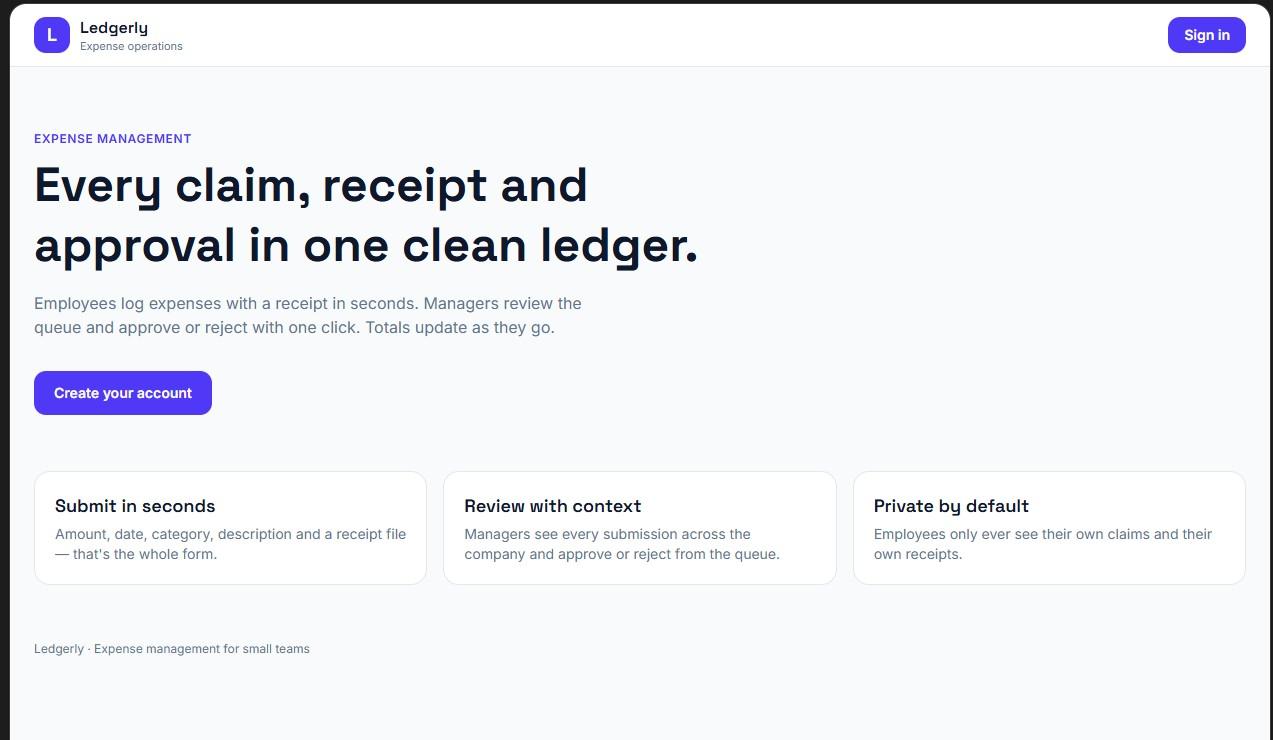
At 8 minutes 57 seconds, Lovable gave me a partial first preview. I could already see the landing experience and general product direction, while the requested expense-management workflow was still being generated.
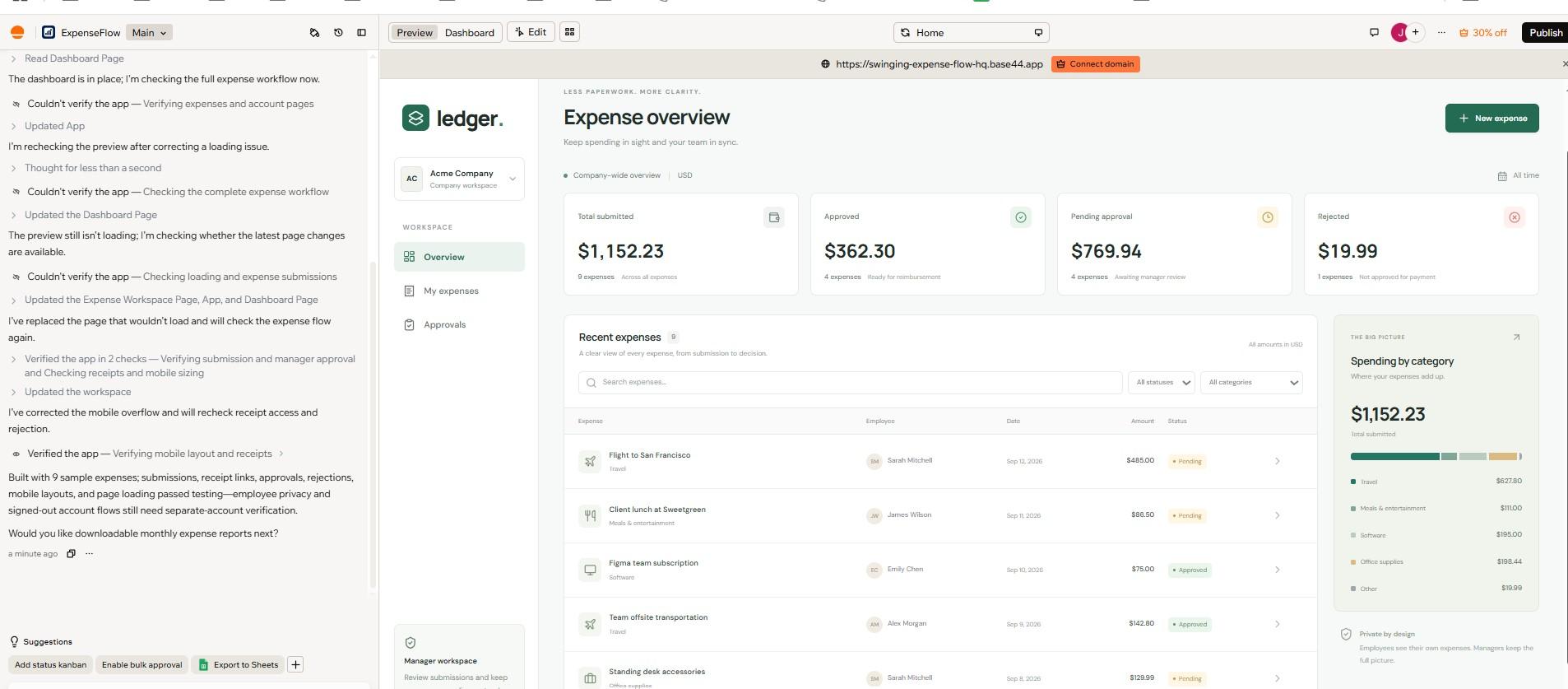
At roughly 11 minutes 30 seconds, I had exhausted the Lovable build credits available in the test account before it completed the build. Around the same time, Base44 returned a substantially more complete application with the expense dashboard, sample records, approval states, navigation, and the broader workflow I had requested.
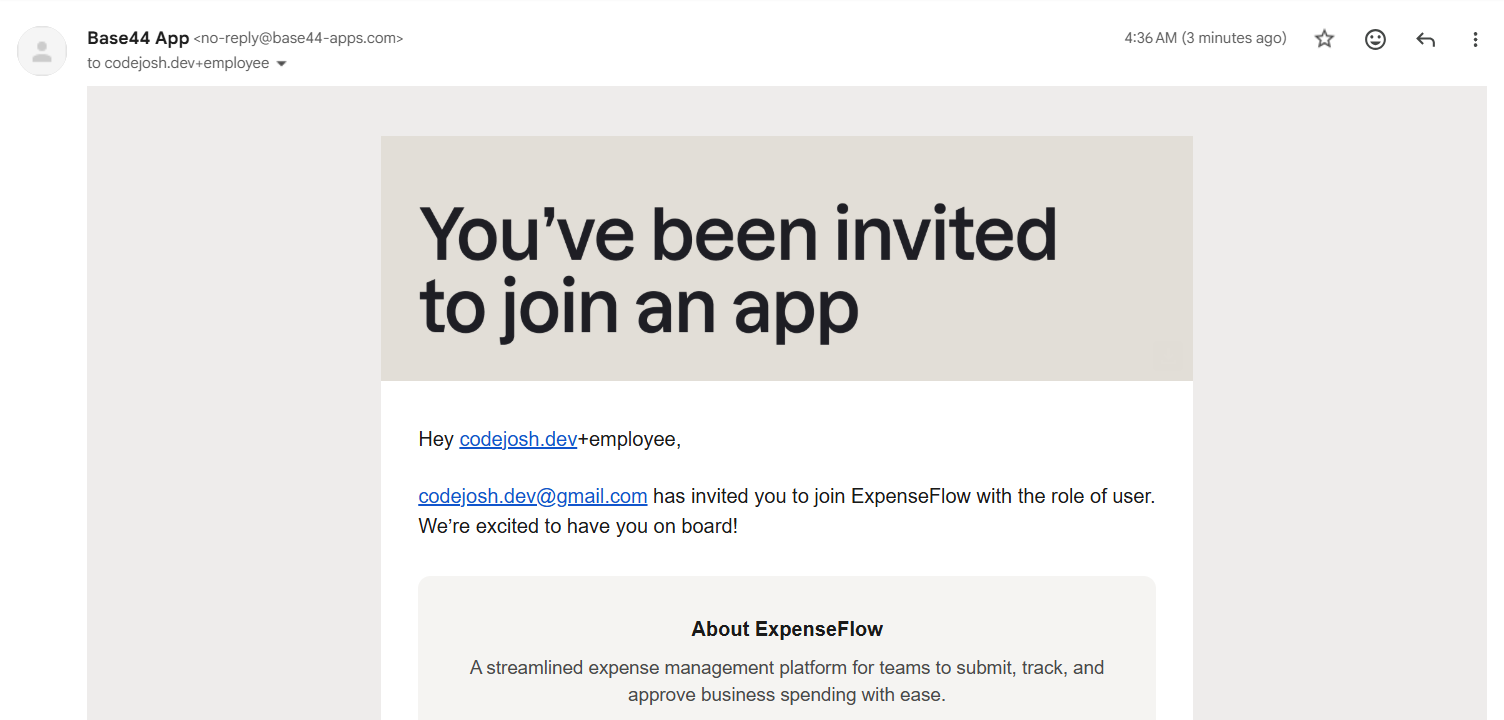
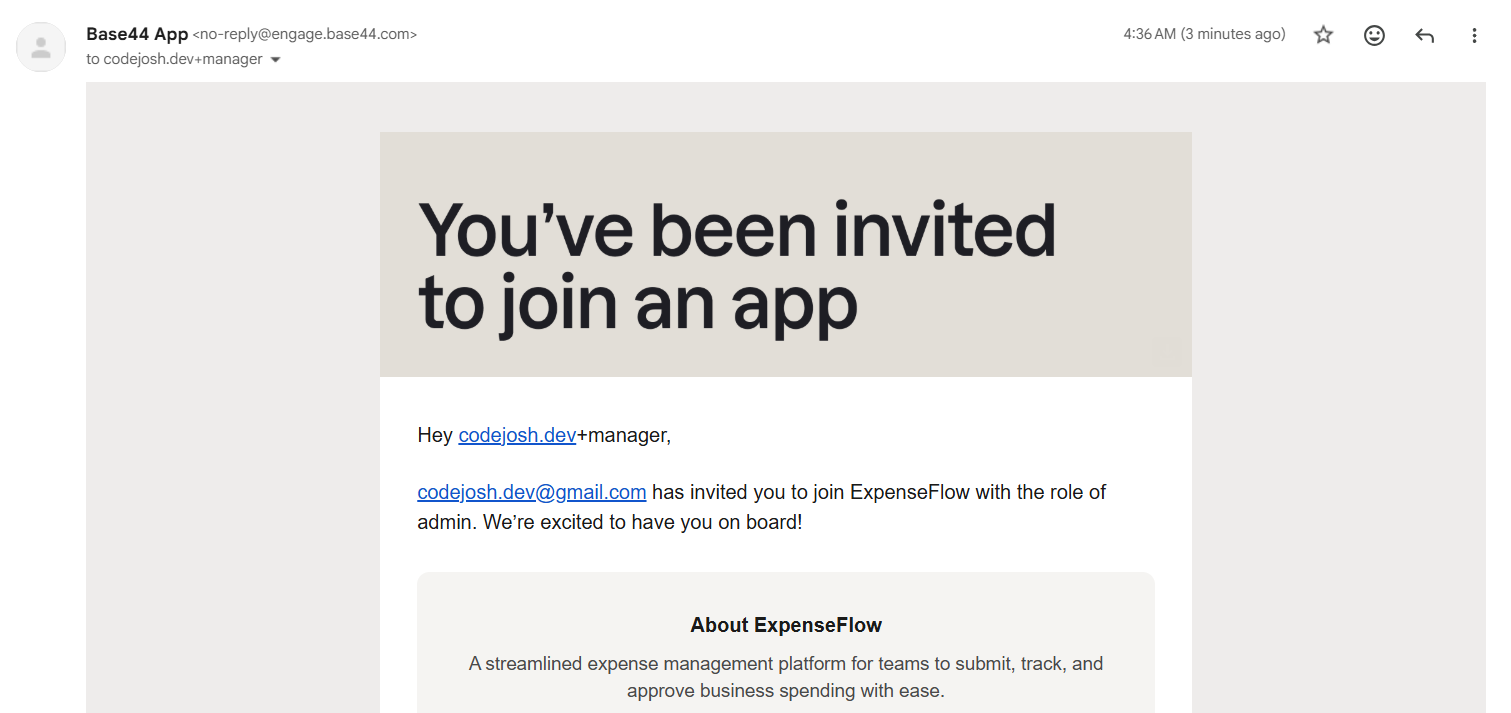
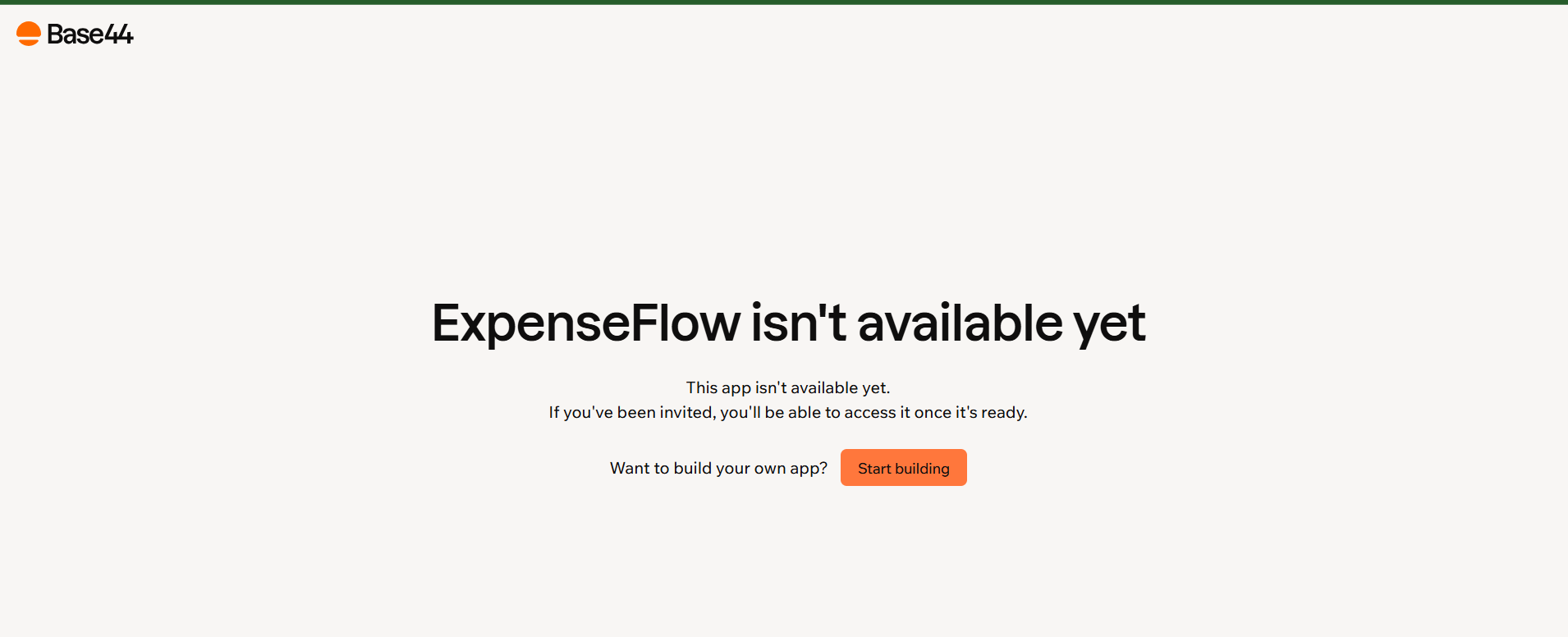
I then published the Base44 app and performed a second test with separate employee and manager accounts. Base44 sent a verification code for each login. Before publication, the role invitations reached my inbox, but the invite links returned an “app isn’t available yet” screen, so publishing was required before I could complete this invitation-based test.
Publishing Was Required for the Invitation-Based Role Test
Role Permissions and Approval Workflow
Once the app was published, I signed in separately as the manager and employee and tested the role workflow end to end. Here are the results:
- The manager account could see the Approvals area, while the employee account did not.
- I first created a $500 expense from the manager account. It did not appear in the employee account, which showed only that employee’s own records in my test.
- I submitted two expenses from the employee account, including a $500 flight and a $150 books purchase. Base44 required a receipt before allowing submission.
- From the manager account, I rejected the flight and approved the books purchase.
After refreshing the employee account, both status changes were reflected correctly: $500 rejected and $150 approved.
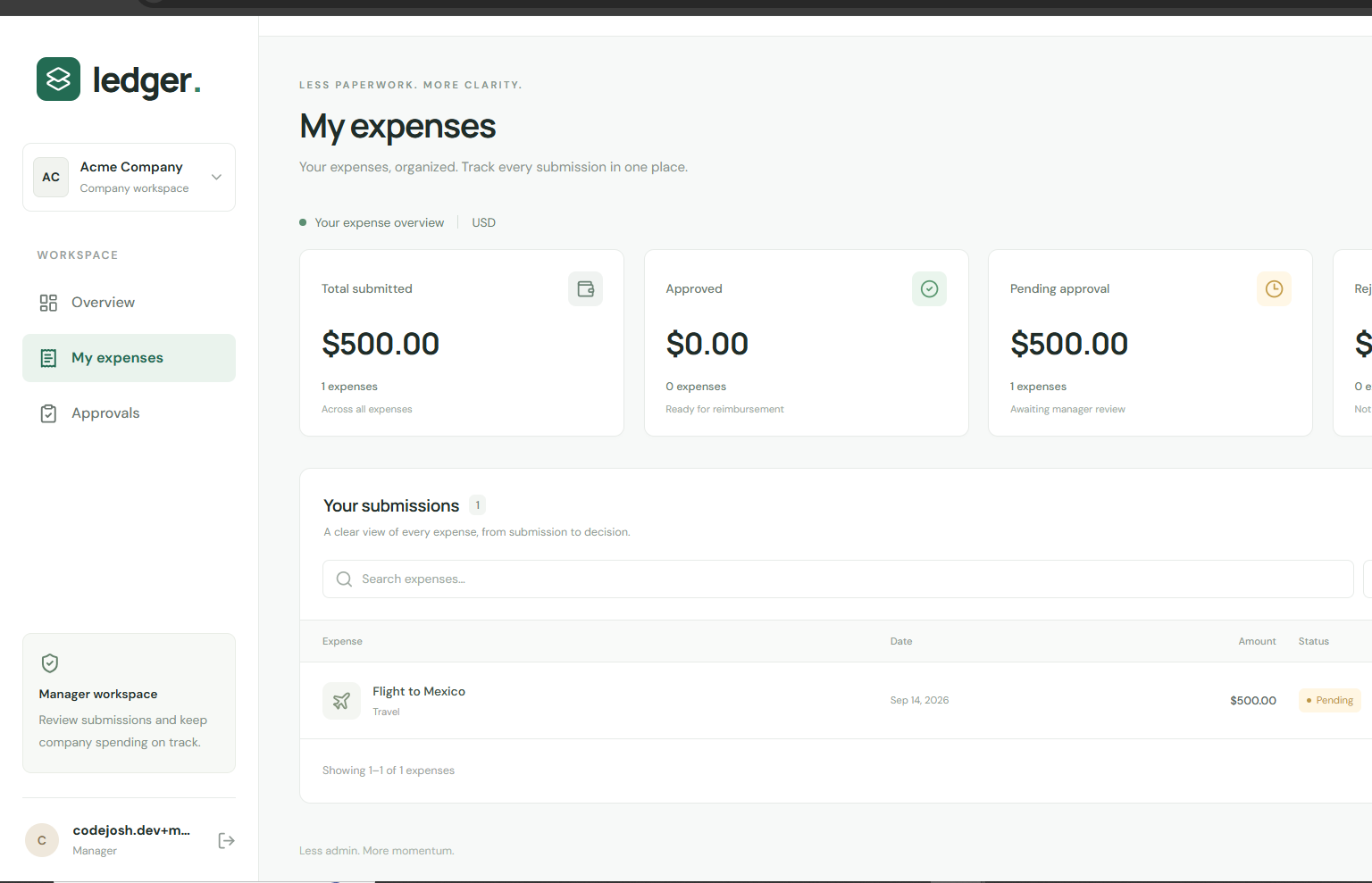
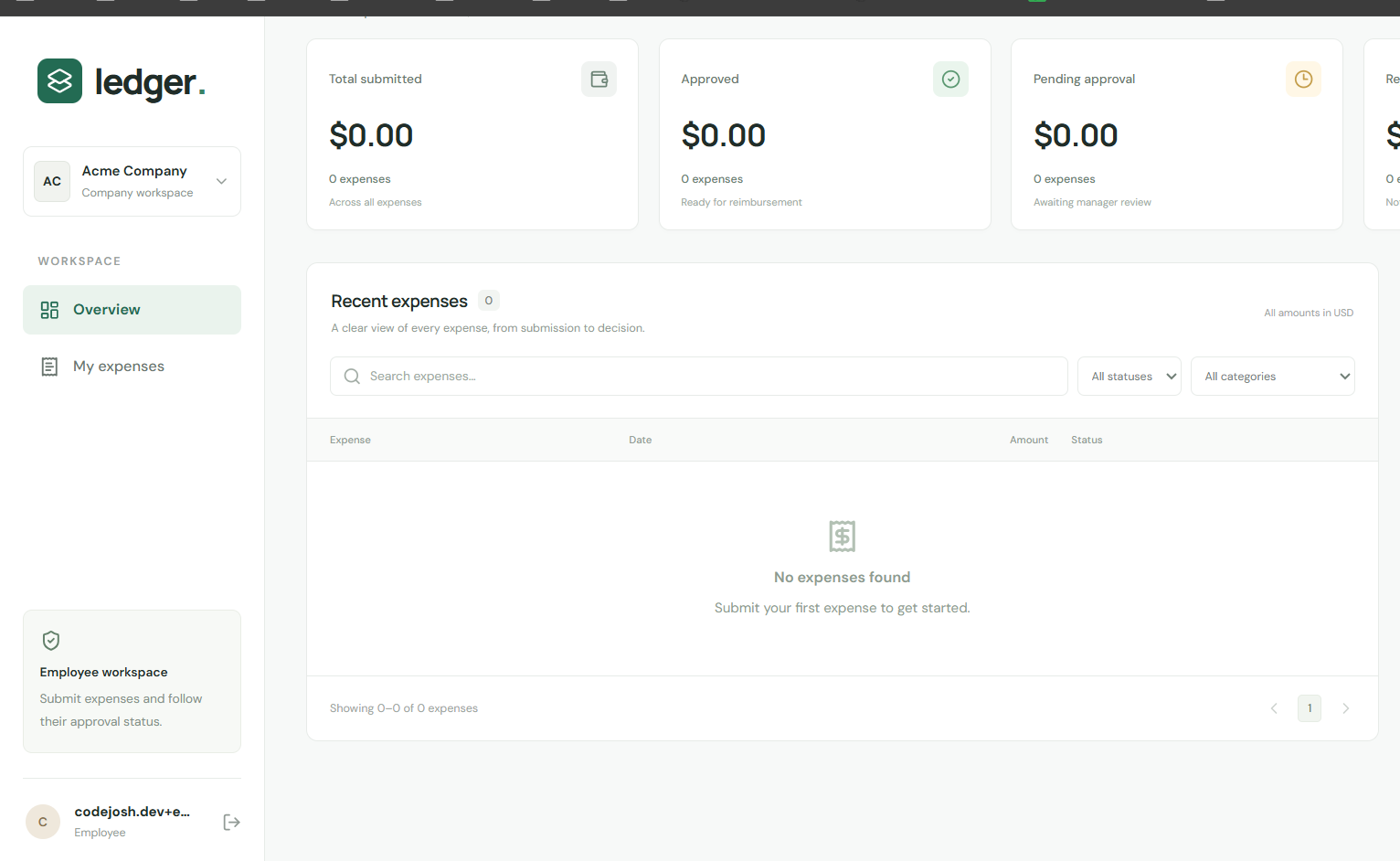
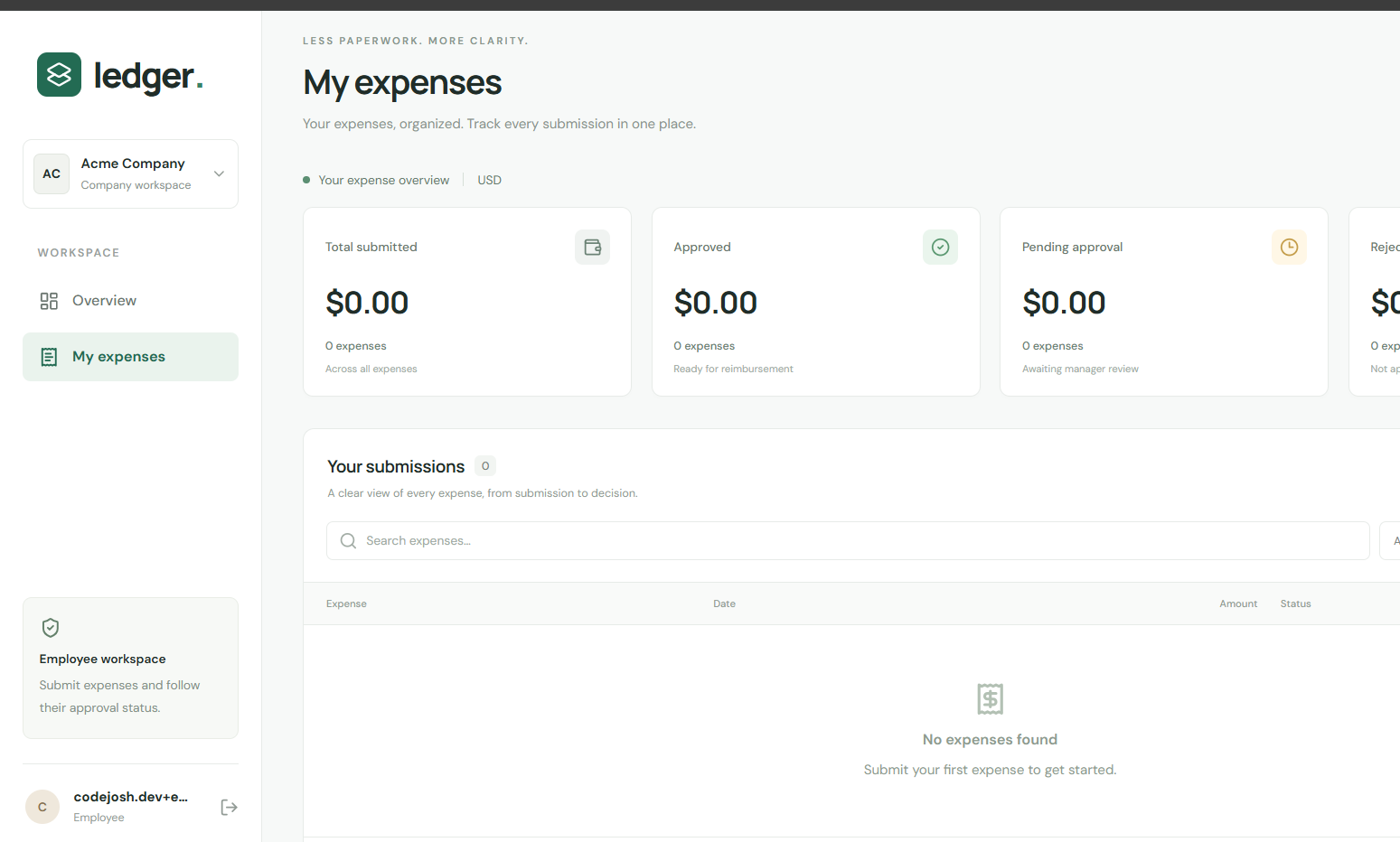
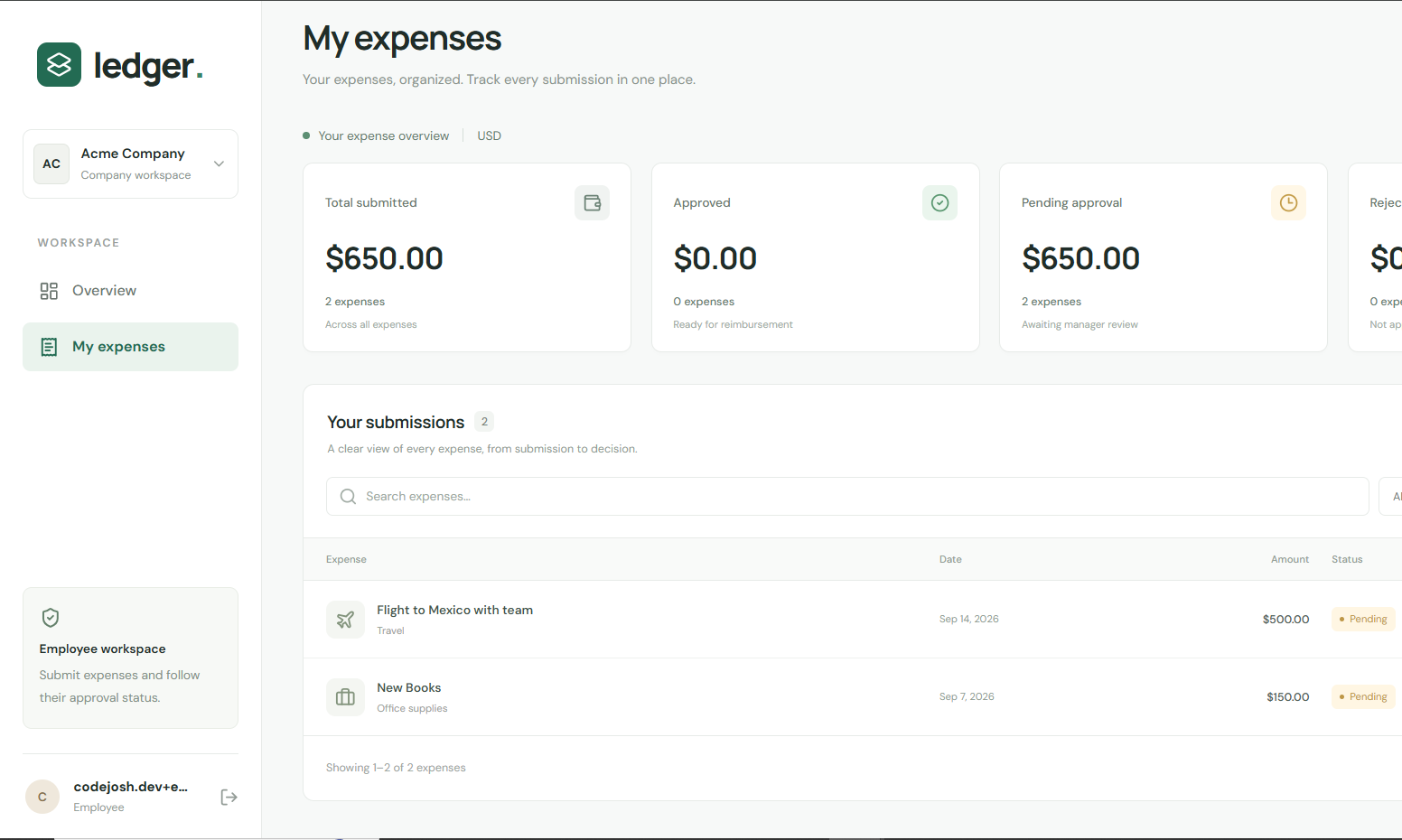
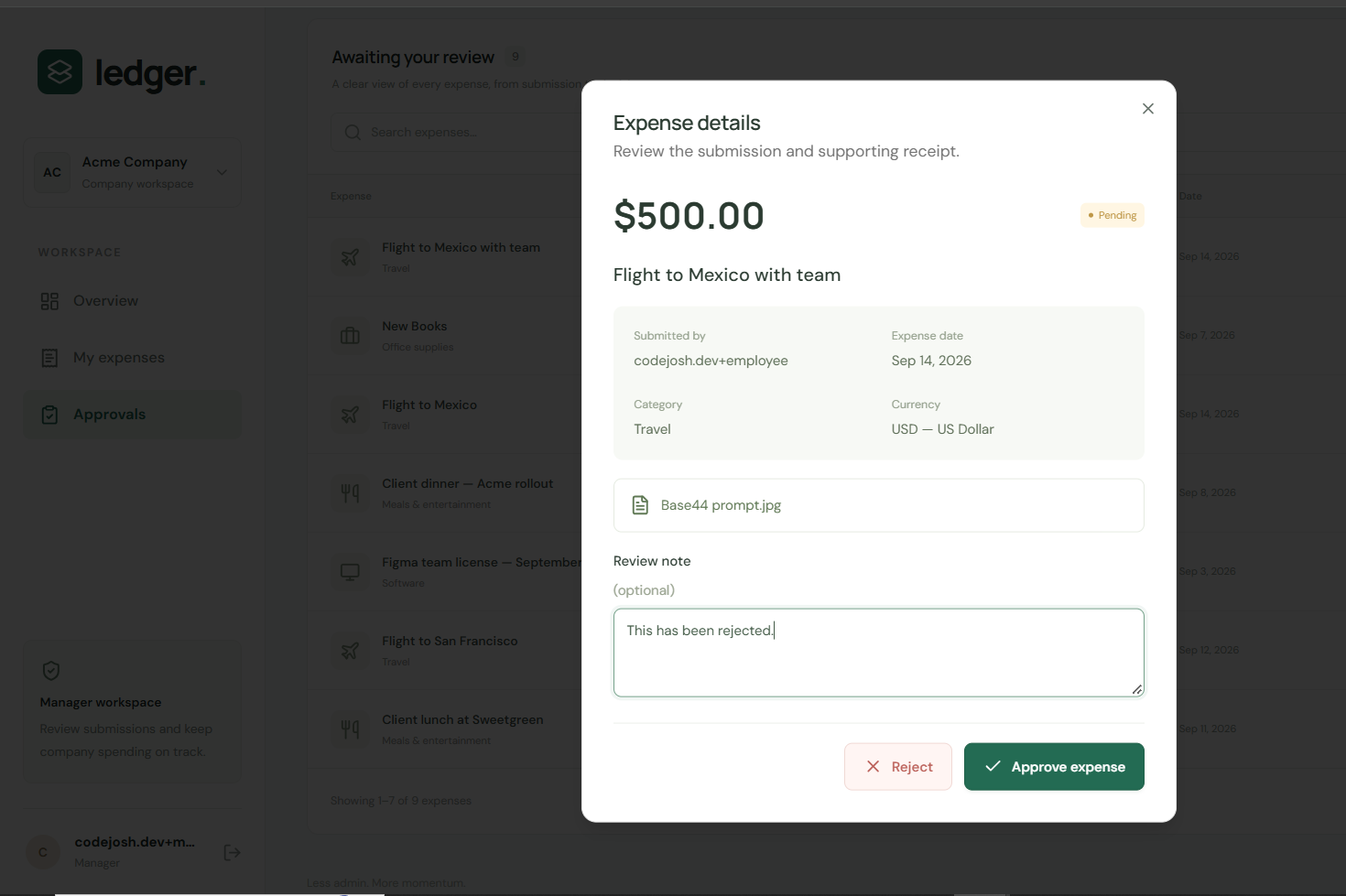
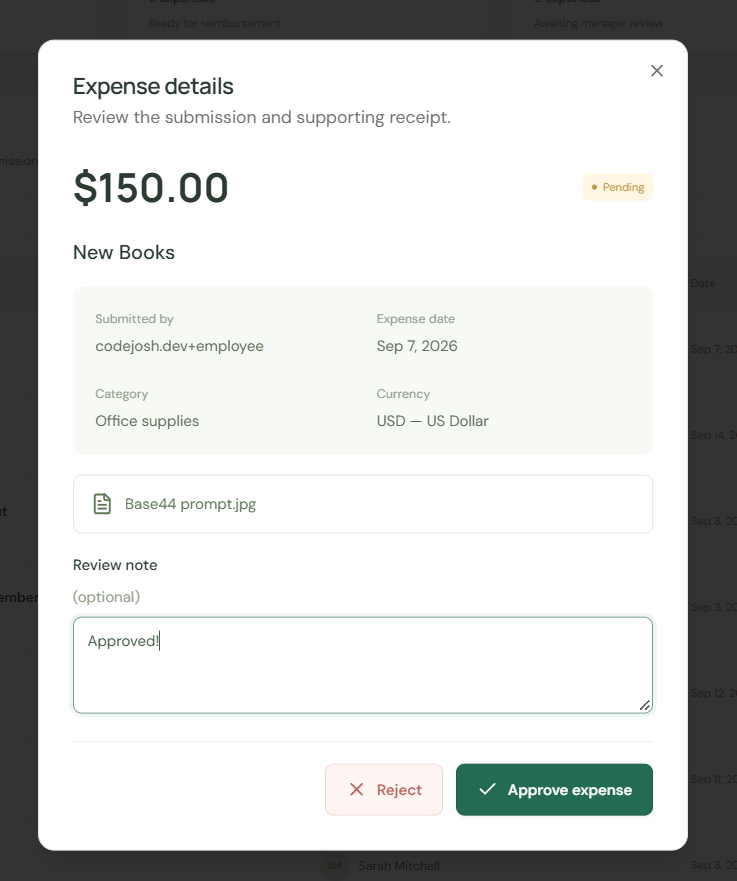
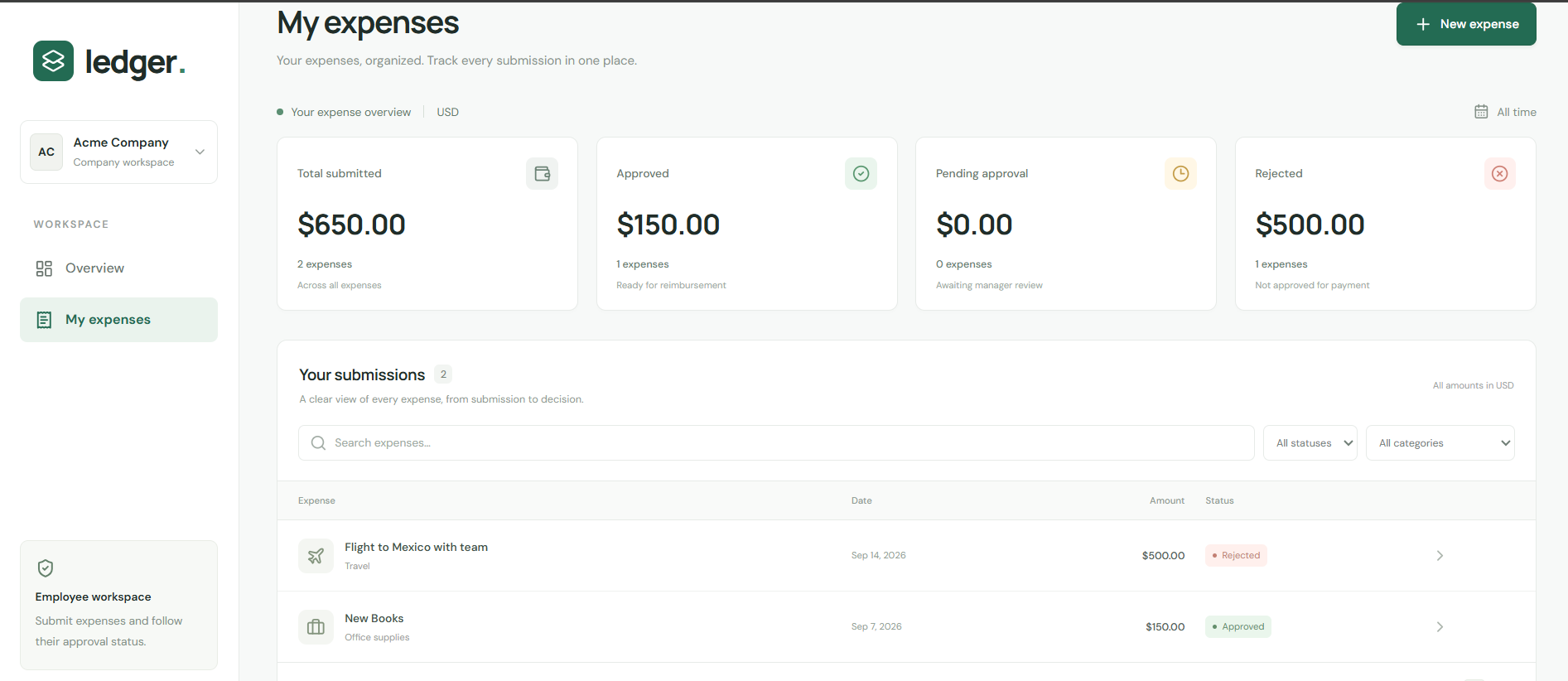
In my hands-on test, the core role separation, receipt validation, approval/rejection flow, and status persistence all worked across separate authenticated accounts.
In this controlled build, Base44 reached the requested workflow first and then held up under a separate role-based functional test.
2. Code, Data, and Infrastructure Portability
Winner: Lovable.
The code-access gap between the platforms is now fairly small. Base44 supports GitHub sync, local development, code exports, custom functions, and separate CSV data exports. Lovable provides similar code access with a wider set of Git providers.
Runtime portability is where Lovable pulls ahead. Base44’s managed authentication and database remain Base44 services, so a full departure requires replacing those services and adapting dependent code. Lovable provides a clearer documented path to managed or self-hosted Supabase and external application hosting.
There is still migration work on Lovable. Supabase-compatible PostgreSQL is only one part of the backend; authentication, storage, real-time services, functions, secrets, and user migration still need to be accounted for.
3. Developer Handoff and Software Delivery Lifecycle
Winner: split. Lovable for repository breadth, Base44 for bringing in an existing compatible codebase.
Lovable supports two-way synchronization with GitHub, GitLab, and Bitbucket on all plans. Developers can work in their usual IDE, push commits, and bring changes back into Lovable. One project connects to one repository and one active synced branch at a time.
Lovable’s Git sync is export-only. You cannot import an existing repository into a Lovable project, and connecting a project creates a new repository.
Base44 covers developer handoff through several workflows.
Its standard two-way GitHub sync starts on Builder and above. Changes merged to main sync back to Base44, and you publish separately before users see them.
Base44 also shipped Branches in August 2026, with up to five builds running in parallel. Each branch gets its own chat, preview, version history, pages, code changes, and supported entity and backend-function changes.
You can create new entities and add fields on a branch. Removing entities or fields, changing an existing field’s type or required status, and changing data permissions still happen on `main`. Records remain shared with production unless you enable Test Data.
When GitHub is connected, Base44 Branches can work with repository branches. You can import an existing branch from the connected repository into Base44, keep its GitHub name, and continue committing to that same branch.
Base44 also has a separate workflow for connecting an existing compatible GitHub repository, keeping the repository as the source of truth while Base44 works through branches and pull requests. The repository must contain a web or full-stack application that can build and run from source in Docker.
So, a new project, a team on GitLab or Bitbucket, or mixed plan tiers point to Lovable. An existing compatible GitHub application that needs to come into the builder points to Base44. If your team works entirely in GitHub and you’re already on Builder or above, the practical gap is much smaller.
4. Security, Governance, and Shadow AI Applications
Verdict: close. Your plan and governance requirements decide which one wins.
This category covers two separate jobs: protecting the information inside the application and controlling how employees build, publish, and maintain AI-generated apps.
- Base44: Data-access rules, encrypted secrets, and security scanning are built into the platform. Enterprise adds SSO enforcement, SCIM provisioning, IP allowlists, and audit logs. Workspace-owned API keys can also stream audit logs and workspace data into external monitoring systems through Base44’s Monitoring API.
Its Enterprise Governance Pack adds controls for connectors, publishing permissions, default app visibility, and who can invite external collaborators. Data residency in the EU, UK, or US is available on Elite and Enterprise, although Base44 says the feature is rolling out gradually. - Lovable: Project-level security scanning is available alongside a workspace Security center on Business and Enterprise for reviewing findings, secrets, authentication policies, dependencies, and project status across the workspace.
Its insights can surface externally published applications, projects without owners, and unresolved findings. Enterprise adds scheduled scans and audit logs retained for 13 weeks, or roughly 90 days.
On shadow AI, both platforms restrict project or application transfers at the workspace level. Neither has a unique universal advantage here, so compare the roles, plan tiers, audit requirements, publishing controls, connector policies, and monitoring options against your own governance model.
Don’t pick either platform on a compliance logo alone. Your team still needs an inventory of approved apps, named owners, access reviews, and a policy for what company or customer data can enter each application.
5. Testing Against Production Data
Winner: Base44 for new projects as of September 2026.
This is one of the biggest differences I found because both platforms have workflows where testing can touch live data.
Base44’s branches share the same records as main by default. Adding, editing, or deleting a record while previewing a branch can therefore affect the live application. Its local development environment also forwards selected requests it cannot execute locally, including email sending and AI generation, to hosted services.
Base44 addresses the database side with Test Data mode on Builder and above. Enabling it creates a separate, empty test database, so reads and writes stay separate from production. You can also share a testing link that uses the test database.
Lovable is moving in the other direction. Its separate Test and Live Cloud environments retired on September 21, 2026. Test databases detach that day, remain restorable until October 21, and are then permanently deleted. Drafts replace the old workflow, but drafts do not provide a second database. Editing or deleting records through a draft still affects the project’s database.
One migration detail for existing projects is that publishing from Test to Live carries your schema, storage-bucket definitions, RLS policies, and edge functions. It does not carry database rows, user accounts, uploaded files, or authentication settings.
Any existing Lovable project with required data still in Test needed to have that data moved before September 21, 2026. Since Test has now been detached, any app whose Live database was left empty will continue running on that empty database.
For a product team handling customer records, Base44 currently gives you the clearer built-in path to testing record changes against an isolated database.
6. Pricing vs. Total Cost of Ownership
Verdict: Base44 has an edge for straightforward, database-heavy apps with mostly standard record activity. AI-heavy and high-usage applications need workload testing on both.
The headline subscription tells you very little about what the finished app costs to operate. Budget for four things:
Platform subscription + live application usage + external services + engineering time.
Base44 Pricing
Message credits cover building, while integration credits cover selected live features.
With annual billing, Base44 currently works out to:
- Starter: $16/month
- Builder: $40/month
- Pro: $80/month
- Elite: $160/month
That is 20% below its monthly pricing.
Base44 publishes rough build-cost guidance:
- Around 0.5 message credits for a simple change.
- Around 1 credit for a small feature.
- Around 2 credits for a complex module.
- Roughly 3 to 4 credits for an app-wide change.
- About 0.3 credits per message in Discuss mode.
Manual visual edits consume no message credits. These are estimates, and Base44 calculates the actual credit use after the action runs.
At runtime, built-in actions such as email, file uploads, AI calls, and workflows consume integration credits. Standard database reads and writes do not. Calling external services with your own API key also avoids Base44 integration charges, although that provider bills you separately.
Credits are shared across a Base44 workspace, so invited members use that workspace’s plan and credit pool.
That gives Base44 a meaningful cost advantage for a conventional records-heavy application whose users mostly create, read, update, and delete ordinary database entries.
Lovable Pricing
Lovable’s current billing model uses a general credit balance across building, Cloud infrastructure, and AI features inside deployed apps, although the rollout is gradual and some workspaces may still show the earlier billing experience.
- Pro: $25/month, or $21/month with annual billing.
- Business: $50/month, or $42/month with annual billing.
Both start with 100 monthly plan credits and include:
- Five daily build credits
- 20 monthly Cloud credits
Lovable labels the Cloud grant as temporary.
Pro and Business also use different plan credit rates for Cloud and AI usage: $0.25 per credit on Pro and $0.50 per credit on Business.
That does not mean the same Cloud or AI workload costs twice as much on Business. Lovable states that fewer Business credits are deducted because each credit represents more dollars; the underlying Cloud or AI usage value remains the same.
Run costs include database resources, storage, network traffic, compute, and AI calls. Customer activity can therefore increase spend even when nobody is developing.
Run usage can take up to 24 hours to appear, and credit history only began recording in March 2026.
Price the Workflow, Not the Credit
For an expense app handling 1,000 receipts a month, price the complete sequence: 1,000 uploads, 1,000 AI extraction calls, 1,000 confirmation emails, plus database usage, storage, failed attempts, and the engineering time required to maintain it.
Plan for credit exhaustion too. Base44 actions that need unavailable integration credits fail. Lovable can interrupt build activity, AI features, or Cloud services when available credits run out. Usage alerts and top-up rules belong in the production setup.
Base44 vs Lovable: Decision Summary
| Criterion | Winner | Why |
|---|---|---|
| Speed to a testable product | Base44, in my test | Reached a substantially more complete workflow within the same test window and available starting credits. Lovable surfaced design choices earlier but exhausted the build credits available in my session before completion. |
| Code, data, and infrastructure portability | Lovable | The code gap is small. Lovable has the clearer documented path to running the backend outside the platform. |
| Developer handoff, new project | Lovable | GitHub, GitLab, and Bitbucket sync on all plans. |
| Developer handoff, existing compatible codebase | Base44 | Documented workflow for connecting an existing compatible GitHub repository; Lovable Git sync creates a new repository rather than importing an existing one. |
| Security and governance | Close | Both provide substantial application and workspace controls. Fit depends on your access, audit, publishing, and governance requirements. |
| Testing against production data | Base44 | Test Data mode on Builder and above. Lovable retired its Test/Live database split on September 21, 2026. |
| Total cost of ownership | Base44 for straightforward record-heavy apps; workload-specific beyond that | Standard database reads and writes consume no Base44 integration credits. AI, file, email, and compute-heavy workflows need real usage testing on both. |
Run Your Own Base44 vs Lovable Evaluation
Every Base44 vs Lovable comparison, including this one, is based on an application that may differ from yours. If you would like to make your own evaluation, I’ve added a list of metrics and what you should record.
What to Measure
| Metric | What to Record |
|---|---|
| Time to first working version | Measure from the first prompt until another person can sign in, complete the core workflow, and return to find their data saved. Record the first successful deploy separately. The time between “deployed” and “actually works” is part of your build time. |
| Prompt and credit usage | Record actual build and runtime consumption. Screenshot balances before you start. Base44 calculates final credit use after an action runs, while Lovable says new Run usage can take up to 24 hours to appear. |
| Manual corrections | Log every follow-up prompt and manual change across UI, code, permissions, validation, and database structure. Include the time required to make and verify each correction. |
| Security findings | Run each platform’s available security checks before publishing. Record the number and severity of findings, what you fixed, and what remains unresolved. |
| Developer handoff | Give another developer the project and record every step, credential, environment variable, plan requirement, and configuration needed before they can run and change it locally. |
| Deployment | Record what it takes to deploy outside the original builder and which services remain connected afterward. For Lovable, check whether the project uses TanStack Start or an older React/Vite stack before selecting a host. |
| Portability | Test source code, data, backend runtime, and deployment separately. Record what moved automatically, what required manual work, and what required replacement. |
| Production gaps | List everything still required before real users can depend on the app, including tests, monitoring, error handling, performance checks, rate limits, backup and recovery, and unresolved security work. Turn that list into engineering tickets. |
Do Not Test Against Live Customer Data
Use synthetic or clearly designated test records.
On Base44, enable Test Data if your plan supports it. Remember that some local-development requests, such as email or AI calls, can still use hosted services.
On Lovable, drafts do not create a second database. After the September 21 Test/Live retirement, Cloud projects operate against one database, so data isolation needs to be intentional.
Three More Tests to Consider Adding
1. Recovery From a Bad Generation
At some point, the AI will generate something you do not want. Time how long it takes to return to the last working state.
Record whether recovery required a simple revert, version history, Git, manual code changes, or another prompt. A tool that builds quickly and takes an hour to recover from a bad change may not actually be faster over a full project.
2. Runtime Cost at Your Expected Volume
Build cost is only one part of the equation. Price your main user transaction at realistic volume. Wait for delayed usage reporting before closing the test, particularly on Lovable.
3. Who Can Operate the App Without Help?
Hand the finished application to the person who will actually maintain it and do not guide them.
Ask them to make a small UI change, investigate a failed workflow, add a field, and find where usage or errors are reported. Record where they get stuck and what documentation or engineering help is required.
This tells you whether the platform fits the people who will own it after the initial build.
Run the Test Fairly
Use the same person to build both versions, or run a second round with two people swapping platforms. Building the same application twice introduces a learning advantage because you understand the requirements better the second time.
If GitHub handoff is part of your evaluation, Base44’s standard GitHub workflow requires Builder or above.
Record the exact plans and test dates you use so someone else can reproduce the comparison.
Finally, separate three kinds of conclusions in your notes:
- Tested: You completed the step yourself and recorded the result.
- Documented: The platform says the capability exists, but you did not complete it during your test.
- Not tested: You did not verify it yourself through the evaluation.
That distinction makes your Base44 vs Lovable comparison far more useful. You know what happened in your build, what the vendor currently supports, and which assumptions still need testing before you make a production decision.
Base44 vs Lovable: Which Should You Choose?
If your priority is getting a working product in front of users quickly while keeping the backend, authentication, data, and hosting inside one managed environment, Base44 is the stronger starting point.
In my hands-on build, it reached the requested workflow first, and the employee/manager permissions, required receipt upload, approval/rejection flow, and status updates held up when I published the app and tested separate accounts.
Base44 also has much more developer depth than its earlier no-code reputation suggests, including GitHub workflows, local development, Branches, an existing-repository workflow, and isolated Test Data on Builder and above.
If your roadmap puts more weight on infrastructure portability, multiple Git providers, company-controlled backend services, and eventually running the full application outside the builder, Lovable has the stronger architecture for that path.
Neither choice removes the engineering work that appears between a prototype and a product customers can depend on. Permissions still need testing. Generated code still needs review. Production monitoring, recovery, security, usage costs, and migration planning still belong to your team.
If you’re still evaluating your architecture, use cases, costs, or delivery plan, our AI implementation strategy playbook covers those decisions in more detail. Read it for free here.
Frequently Asked Questions (FAQs)
Yes, depending on what you’re building. Lovable offers stronger backend portability, while tools such as Bolt.new, Replit, and v0 suit different development workflows. Base44 remains a strong choice when you want fast full-stack generation with authentication, data, and hosting managed in one platform.
Base44 is the better fit if you prioritize fast, managed full-stack development, while Lovable is stronger when portability and external infrastructure matter more. Lovable also provides a clearer documented path for moving your application and backend outside the platform.
Popular Lovable and Base44 alternatives include Bolt.new, Replit Agent, v0, and Bubble. Bolt is a close prompt-to-app alternative, Replit offers a more developer-oriented environment, v0 is particularly strong for UI generation, and Bubble provides a mature no-code application platform.