

Logistics Software Development Services Powered by AI

Connect transportation, warehouse, and business systems without treating every challenge as a full rebuild. ClickIT’s LATAM engineers develop applications, modernize data pipelines, and integrate AI around the workflows your logistics teams need to improve.

Trusted by teams building
complex logistics and software systems

Truckbase Logo

Truckbase

Lozmar

Geoforce

Rufus Labs
Reconstruct

SWARM Logo

SWARM

25 Madison

ClickIT's Proven Results

40+

Projects delivered for
Logistics Companies

30%

Faster delivery
velocity

40%

lower TCO

100%

Error reduction in
automated workflows

100% Secure-compliant with SOC 2 / ISO 27001  

Our Logistics Projects

Geoforce

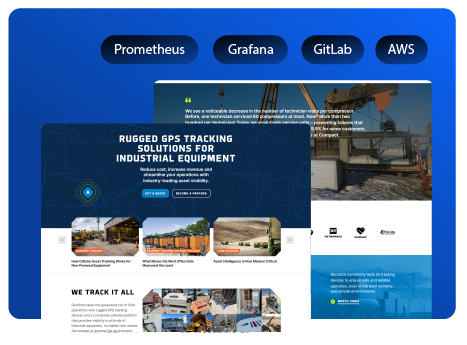
ClickIT migrated PostgreSQL to Amazon RDS, improved data ingestion, and introduced demand-based infrastructure scaling. The project reported 99.9% uptime and a 70% reduction in cloud costs, supporting more reliable logistics data operations.

Truckbase

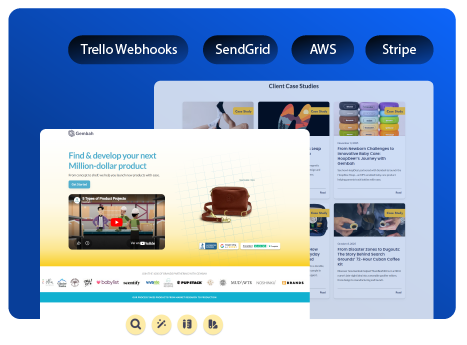
Disconnected workflows created repeated data entry across fleet operations. ClickIT connected tracking, invoicing, and accounting within a logistics application, using serverless processing and automated testing to support demanding workloads and ongoing product releases.

Lozmar

Manual invoice preparation could not keep pace with growing demand. ClickIT built a Node.js API connecting XML data, ERP workflows, and tax-document processing, with mobile document access for drivers. The project reported a 100% reduction in manual invoicing errors

Where Are Disconnected Systems Slowing Your Operations

Repeated data entry, unreliable integrations, and delayed shipment updates often need coordinated software and data work. Identify the workflow blocking your team, then define the systems, information, and application changes required to address it.

AI in the Logistics Industry:

What ClickIT Delivers

AI Solutions for Logistics Operations

We define success using agreed operational and engineering metrics, then build the software and data workflows needed to support those goals.

  • AI Dispatch and Operations Copilots
  • Predictive ETA and Delay Detection
  • Route and Load Optimization
  • Freight Document Processing
  • Carrier Communication Automation
  • Shipment Exception Management
  • Fleet Maintenance Prediction
  • AI Customer Service for Shipment Status
  • Automated Quote-to-Delivery Workflows

Data & Infrastructure

We build the data foundation that enables real-time visibility and future AI capabilities, helping logistics companies overcome messy data. 

  • Data pipelines (ETL/ELT)
  • Data platforms
  • Real-time processing
  • Data ingestion
  • Data Foundation

Integration & Modernization

We modernize your legacy systems and stabilize integrations, so your team can deliver faster, more reliable releases.

  • ERP / WMS integration
  • Legacy system modernization
  • EDI/API products
  • Warehouse system connectivity

Logistics Software & Customer Platforms

We build customer portals and logistics applications that improve delivery speed and stability, and provide a unified experience for your clients.

  • Customer-facing apps
  • Freight systems
  • Shipping logistics management platforms
  • Fleet management systems
  • Warehouse management support tools
  • Inventory control platforms
  • Tracking systems and operational dashboards

Choose the Collaboration Model That Fits Your Project

We adapt to your business needs, timelines, and internal capabilities through flexible engagement models:

Fixed-price projects:

Ideal for MVPs or clearly defined features. We scope the work upfront and agree on a fixed price based on estimated hours and deliverables.

Staff Augmentation:

A fixed monthly rate per engineer, working as an extension of your team. This is the preferred model for scaling teams that need long-term support and fast ramp-up.

Time & Materials:

Flexible engagement based on actual hours worked. Ideal for evolving projects where scope and priorities change frequently.

Not sure which model fits your case?

We help you choose based on your roadmap and constraints.
Learn more »

We Develop AI Solutions for Diverse Logistics Operations

Warehouse
Management

We optimize warehouse operations with AI-driven workflows, real-time visibility, and smarter task allocation to improve picking efficiency, reduce manual errors, and increase throughput across your WMS and fulfillment processes.

Transportation and Fleet Operations

Build real-time systems for dispatch, vehicle tracking, driver coordination, load planning, route optimization, and fleet performance monitoring.

Asset and
Navigation Tracking

We track and monitor assets in real time using IoT and integrated data systems to improve asset utilization, reduce loss, and gain full visibility across equipment, containers, and high-value assets.

Shipment Tracking
& Visibility

We enable end-to-end visibility across shipments, carriers, and logistics operations to provide real-time updates, reduce delays, and improve coordination between warehouse, fleet, and customer systems.

Fleet
Management

We optimize fleet performance with route optimization, monitoring, and predictive insights to reduce fuel costs, improve delivery times, and increase overall fleet efficiency across operations.

Transportation System Integration

Connect your TMS with carrier, warehouse, and accounting systems. Align data exchanges so shipment execution and billing require less duplicate entry.

Customer Portals
& Self-Service Platforms

We build customer-facing platforms and Carrier Portals that provide real-time access to shipments, documents, and operations, reducing support load, improving transparency, and enhancing the customer experience through integrated logistics data.

EDI &
Document Processing

We automate the processing of logistics documents, such as invoices, BOLs, and EDI transactions, to reduce manual errors, improve compliance, and accelerate operational workflows.

Where We’ve Connected with AI Leaders

Technologies for Your Logistics Platform

Logistics System Integrations

  • Transportation Management Systems and integrations
  • WMS integrations
  • Carrier APIs
  • EDI integrations
  • GPS and telematics
  • IoT and asset tracking
  • Freight marketplaces
  • Customer and driver applications

Ready to move from legacy systems to AI in production?

We help logistics companies build the data foundations, integrations, apps, and AI systems that improve operational speed and scalability.

FAQs

How does AI integrate with legacy TMS, ERP, and WMS platforms without a full system overhaul?

ClickIT builds custom data platforms and API/EDI bridges that interface directly with existing logistics infrastructure. By stabilizing integrations and establishing real-time data pipelines (ETL/ELT), AI agents and automation apps operate seamlessly alongside legacy ERP, TMS, and WMS platforms without disrupting ongoing warehouse or fleet operations.

How does ClickIT help move logistics AI initiatives from Proof of Concept (PoC) into production?

ClickIT delivers production-ready AI architectures utilizing LLMs, LangChain, AutoGen, and agent orchestration built on AWS, Azure, or GCP.

Starting with AI Readiness Assessments and targeted MVPs, every solution undergoes automated error handling, continuous verification, and strict integration monitoring to ensure scalable, enterprise-grade deployment.

How do AI agents automate document processing and EDI workflows in logistics operations?

ClickIT deploys autonomous AI workflows and Intelligent Document Processing (IDP) systems to extract, validate, and process complex logistics paperwork such as Invoices, Bills of Lading (BOLs), and compliance filings.

For Fletes Lozmar, ClickIT built API-based invoicing automation designed around projected demand of up to 1,500 documents per day. The implementation connected structured document data with existing business systems.

How do we move a logistics AI pilot into production?
  • We define acceptance criteria, test representative inputs, connect required systems, and plan deployment and monitoring. Production scope includes failure handling, access controls, and operational ownership—not just a model that works in a demonstration.

What determines the cost and timeline of a logistics software project?

Integration access, data quality, workflow complexity, testing, and deployment requirements shape the estimate. Start with a defined operational problem and identify dependencies early. Cloud usage, model usage, third-party licensing, and ongoing support should be considered separately from development work.